Aquí está la información sobre el curso en línea que impartiré próximamente sobre William Blake, para la Cátedra Octavio Paz del Antiguo Colegio de San Ildefonso. / Info on the online course on William Blake that I’ll be leading soon (in Spanish).

Aquí está la información sobre el curso en línea que impartiré próximamente sobre William Blake, para la Cátedra Octavio Paz del Antiguo Colegio de San Ildefonso. / Info on the online course on William Blake that I’ll be leading soon (in Spanish).
Among the overwhelming amount of cultural offers, temptations and plain publicity that we’re prone to receive online in current times, frightully exacerbated by the Covid pandemic, there’s been the invitation to enter this year’s National Poetry Competition, ‘one of the world’s biggest prizes for a single poem’, as we are duly reminded by The Poetry Society.
Literary competitions are important for two reasons: they make visible what is being written now, and help to make it available for a wider readership. This matters because, despite the enormous amounts of books that are published every year in the world, a dismally small amount of them can be considered actual literature, by which I mean something worth reading because it can enrich and transform both your inner life and the way you understand and become curious about the reality of existence. Whatever works of any transcendence that are being written now are bound to get lost in the relentless assembly-line of an incontinent and greedy publishing industry, and we can and must hope that literary competitions help to redress the balance.
Then there is, of course, the recognition of the author’s work, and the encouragement that such recognition brings about. Being a writer, a real one, is not easy. It is a lonely business, and it’s easy to get the feeling that there’s no one out there who may find meaning in what we’re doing, or even ever get to read it. When encouragement includes a financial stimulus, it is a generous and necessary way of keeping literature, and writers too, alive: year after year, the Society of Authors reports that the median annual income of a professional author in the UK is below the minimum wage. It is true, believe me, and it obviously is the situation in many other countries, if not all.
I therefore applaud the existence of the National Poetry Competition. Many gifted poets have won it in the past, and we have all been the richer for it. I write these words with due respect for the judges this year, and in particular I feel great respect and admiration for Neil Astley, an author himself, and the editor and founder of the magnificent Bloodaxe Books. Through Bloodaxe, Astley has made visible indeed some of the best work written by contemporary poets in the UK and often beyond. The books, beautifully made, are a true work of love.
This year, however, I read with more attention the publicity for the National Poetry Competition, and I have to say that I feel very uncomfortable.
No, that’s not quite it: I feel depressed. Angry, even.
I guess that the competition has had this format as well in other years. My apologies for having been unobservant. I will talk though about this year’s call. In the Poetry Society webpage we can read: ‘Still looking for inspiration to create National Poetry Competition poems? – the 2020 Writing Guides are here to help!’
Does anyone, may I ask, who genuinely loves poetry ever seek inspiration to create a ‘poetry competition poem’? Poetry doesn’t get written like that, and we know it. Any sought-after ‘inspiration’ to write poems just to send them to a competition will be no inspiration at all. As much as I celebrate the existence of literary competitions, they aren’t the reason why people write literature, at all. If they are for some, it is clear to me that what they write cannot be called literature in any way.
Then there are the writing guides themselves. There is nothing wrong in the insight they offer into a particular chosen poem. That’s not the problem. The problem is that they are conceived as writing guides at all, and come accompanied by “Writing Prompts”. Is this a National Poetry Competition, or the platform for educational material for some school? How can we be serious about the aim of choosing among the best poems being written now while at the same time we feel their authors may be in need of writing prompts?
This is wrong. Utterly, tragically wrong.
Let’s talk now about those documents titled ‘ Q & As with the judges’, which include further advice on how to write a poem, on a very basic level. I doubt that someone who’s starting to write poetry, and to whom this kind of advice would be certainly valuable, is ready to enter a poetry competition at all. I can’t help believing that poets that are indeed ready may feel patronised, infantilised even, by this kind of advice.
Judge Jonathan Edwards’s Q&As, on poetry and ice-cream, particularly depressed me. Rather than saying more, I include the link: Poetry and Ice Cream.
Some years ago I entered a poetry competition. When I received the email announcing the results and saying that sadly I hand’t been lucky this time, I was surprised to find it included a message from the one judge, telling all those of us who didn’t make it why, in general, we had failed. I was annoyed not only because it was unduly patronising (after all, if a poet feels confident enough to send a poem to a competition, she’s bound to know already what she’s doing with her work. She may not satisfy the judge’s taste. She may even be not such a good poet, but she certainly can be trusted to be seeking her own way, rather than being gently reprimanded). I found even more annoying, and a cause of serious concern, the underlying principle behind that reprimand: this is how you have to write poems if you want them to be liked by the judges and therefore win a competition. These are the rules.
Inbred poetry. That’s what we’re looking for.
How on earth did we get here?
I know the intentions are good. Maybe that’s part of the problem, that we have mixed up the arts and literature with sociology in such an abysmal way that we have forgotten completey why people express themselves and create meaning through those means, and why it matters. In the process, we are emasculating the driving force behind any form of artistic expression (will I be accused of using an inappropriate, un-feminist term, I wonder? I’m sorry. I simply can’t find a better one.)
Is there still a way to check this downhill progress?
There is of course great value in learning from those who are ahead in the path, in sharing knowledge and skills and passion. I just believe this is not the way to go about it. It leaves the passion out of the equation. It is a recipe for setting up, then reinforcing, a form of establishment.
We know that poetry and the establishment have never been good friends, and never will be. Think of your favourite poets, and what poem worth its name would they have written had they been following ‘writing prompts’ such as those suggested by the ‘resources’ offered by the Poetry Society to those wishing to enter the National Poetry Competition. Think of Rilke. Anna Akhmatova. Paul Celan. Neruda. Sor Juana Inés de la Cruz. Rimbaud. Think of any poet who has contributed anything of any value to the human spirit, the human imagination and the human mind.
You can be sure that none of them wrote their poems this way.
In case you missed the online book launch of my ebook Flint last 10 September, you can watch it in this video.
Today marks the grim 6th anniversary of the disappearance of 43 students of Ayotzinapa, the murder of three and the grave injuries inflicted on two in the town of Iguala, Guerrero, Mexico.
To this day, no justice has been found for these young men and nothing is known about what really happened to the 43 disappeared students.
Throughout the month of September, 2020, London Mexico Solidarity has been publishing the biography of each of them, as told by their relatives, friends, dear ones.
All these moving biographies keep the students alive and present, and have been gathered in a single booklet that you can find in the London Mexico Solidarity website:
https://londonmexicosolidarity.wordpress.com/2020/09/25/ayotzinapa-6-years-on/
We don’t forget.
I’m pleased to invite you on Thursday, 10th September, to a virtual book launch of my eBook Flint, organised by the UNAM-UK Centre for Mexican Studies.
You can book in the following link:
For more information about the eBook, go to
https://diazenciso.wordpress.com/2020/04/30/flint-an-elegy-and-a-book-of-dreams/
[Scroll down to read in English] Con el apoyo de Escritoras Mexicanas se está organizando un Círculo de lectura de mi novela Cudad doliente de Dios, que se realizará, vía Zoom, los días 27 de julio, 10, 24 de agosto y 7 de septiembre, de 4 a 5.30 PM, hora del centro de México.
Para más información, has clic en el enlace: https://www.escritoras.mx/circulo-de-lectura-invitacion/
Escritoras Mexicanas is organising a reading circle of my novel Doleful City of God (in Spanish). More information in the link above.
Yesterday Chris Edgoose published a most generous review of my eBook Flint in his Wood Bee Poet blog.
I want to thank Chris here for such an attentive reading of my piece. It is always a great joy to find such readers!
You can read the review here:
https://woodbeepoet.com/2020/06/28/the-man-in-the-tunnel-flint-by-adriana-diaz-enciso/
Chris Edgoose’s declaration of principles regarding his reviews of poetry talks of a profound, curious and insightful engagement with poetry that I find liberating and necessary. He affirms to see poetry as both ‘part of the world’, and ‘a way in to the world’, and his blog is an invitation to that understanding and that journey. His guiding principles are here:
/En este enlace puedes leer la entrevista sobre mi novela Ciudad doliente de Dios realizada recientemente por Cristina Liceaga para la página Escritoras Mexicanas. La novela está inspirada en los poemas proféticos de William Blake.
https://www.escritoras.mx/entrevista-con-adriana-diaz-enciso/
The link above will take you to an interview about my novel Ciudad doliente de Dios (Doleful City of God), inspired in William Blake’s Prophetic Poems, published recently by Cristina Liceaga for the Escritoras Mexicanas page. (Please note that the interview is in Spanish.)
(Scroll down to read in English) Los invito a la charla virtual sobre mi novela Ciudad doliente de Dios (Alfaguara/UNAM), inspirada en los poemas proféticos de William Blake, el próximo viernes 19 de junio, a las 17.00 horas (horario de México), en el foro virtual de la cafebrería El Péndulo. Se transmitirá por FaceBook Live. También puedes acceder con este enlace. https://web.facebook.com/Cafebreria.el.Pendulo/videos/329154424748143/?_rdc=1&_rdr.
Además, en el siguiente enlace puedes leer la entrevista sobre la novela, realizada por Cristina Liceaga y recién publicada en la página Escritoras Mexicanas:
https://www.escritoras.mx/entrevista-con-adriana-diaz-enciso/
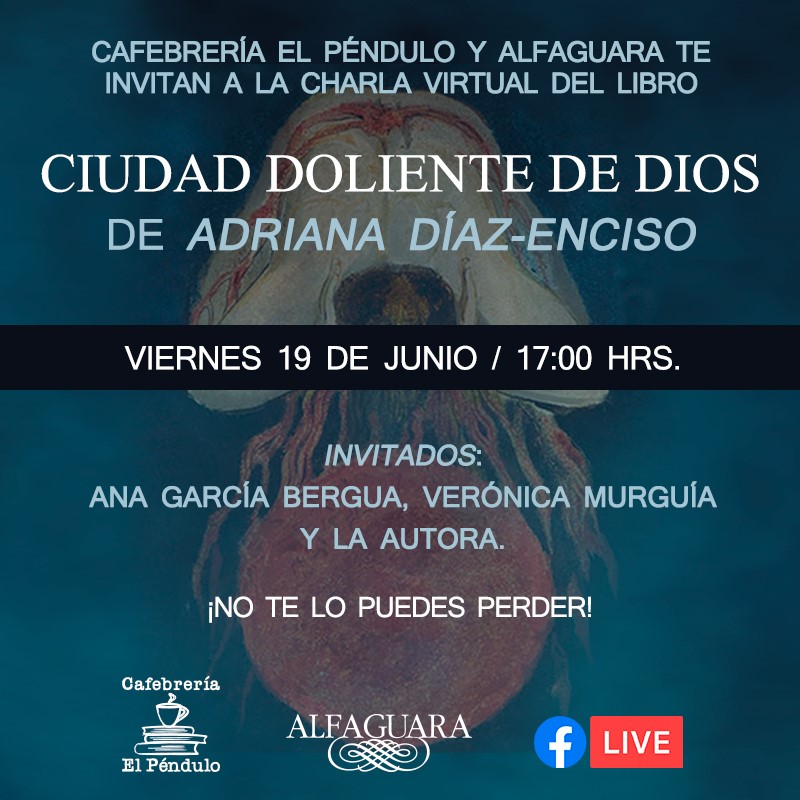
Above is the invitation to the virtual conversation on my novel Ciudad doliente de Dios (Doleful City of God), inspired on William Blake’s Prophetic Poems, next Friday 19th of June at 17.00 pm (Mexico time). The conversation will be in Spanish, via FaceBook Live, and can only be accessed through https://web.facebook.com/Cafebreria.el.Pendulo/videos/329154424748143/?_rdc=1&_rdr
You can also read a recent interview about the novel (in Spanish) in https://www.escritoras.mx/entrevista-con-adriana-diaz-enciso/
Please note that this ebook is no longer for sale. The book will be published soon by Contraband.
Click in the link below for the latest update:
https://diazenciso.com/2022/03/04/flint-to-be-published-soon-by-contraband/
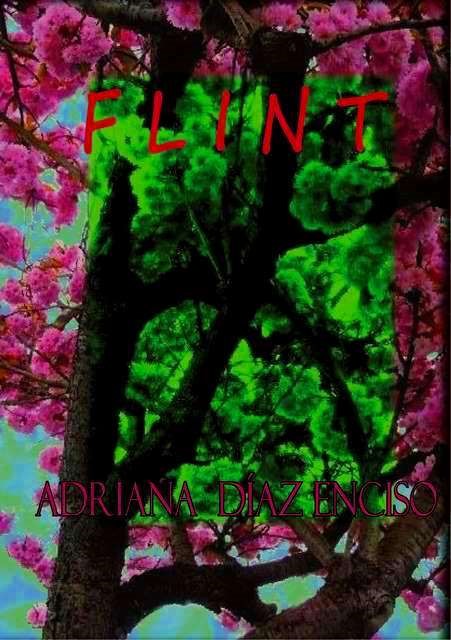
I wrote this genreless piece a year ago, in the spring of 2019. It has been making the rounds with some publishers, living meanwhile in the limbo of all unpublished books. The COVID-19 pandemic is changing much, without and within. As the future shows itself to us as it really is —uncertain—, I doubt this little book will get better chances in it to see the light in a conventional way.
Yet one thing I know: that I wrote it in springtime, that springtime is central to it as an embodiment of hope, and that I want it out in the world before this strange 2020 spring—this stretched moment marked by grief, fear, and yet so much beauty— is over.
That’s why I’ve decided to venture for the first time into self-publishing. Suddenly it feels pointless to me to keep on trying to publish this text ‘properly’. The ways of the publishing industry, as they call it, seem to me now more ghostly and irrelevant than ever, far removed from the urgency which makes us put our inner experience of the world into words.
The origin of this text is strange and inevitably grim: a dream I had the day that Keith Flint, frontman of The Prodigy, passed away. I must confess here that I’m not a Prodigy fan, and I acknowledge my profound ignorance regarding their music and the culture around it. But the dream was intense, it shook and moved me, and unleashed not only a series of dreams of people I have lost, but also a deep gratitude for life and an intensified appreciation of beauty.
The whole thing was strange, and so this piece is strange itself. If you care to read it, you will find my reflections on its genesis in the afterword, where, unsure as to how to name it, I attempt to describe it as “an elegy in prose, together with a dream diary and some musings on catharsis and hero-worship in modern culture.”
If you are wondering why the title is ‘Flint’, the answer is in some dictionaries. One of the definitions of ‘flint’ is, of course, ‘firestarter’. As every Prodigy fan knows, “Firestarter” is one of the band’s greatest hits, and, immortalized in its official video, a rather apt self-portrait of Keith Flint.
Nearly a month after this journey started, a very dear friend of mine, Armando Vega Gil, decided to leave the world the same way that Keith did, so I am dedicating this piece to both of them.
I hope that on reading it —if they wish to do so—, the surviving members of The Prodigy, the band’s fans and Keith Flint’s family and friends will rest assured not only of the respect, but of the true care that animate this book. As for Armando’s fans, friends and family, I do hope they will trust my intuition in dedicating this piece to him as well, knowing how much I loved him.
If in 2019 these words were a kind of offering, and a resolute celebration of life, I’d like to believe that they can still be so now. I’ll therefore just make my offering here, humbly, perhaps darkly, in as artisan a manner as a PDF allows. A third part of whatever proceeds it makes will go to the National Suicide Prevention Alliance, another third to the NHS—a modest yet heartfelt contribution towards collective efforts to save lives, towards reaffirming the preciousness of life.
It just feels right to me that this unusual offering should go out into the world in spring, 2020. I do hope that after lockdown it may find its printed form. But we simply don’t know how the future will be like for each of us, so for now, I’m just happy to leave it as it is in your hands.
To listen to a reading of an excerpt, click on the link below. It’s the first part of the book, and it’s 16 minutes long. My apologies for the rudimentary quality. It was made with the only technology I’ve had access to during lockdown. And sorry if you struggle with my Mexican pronunciation! https://vimeo.com/413755752
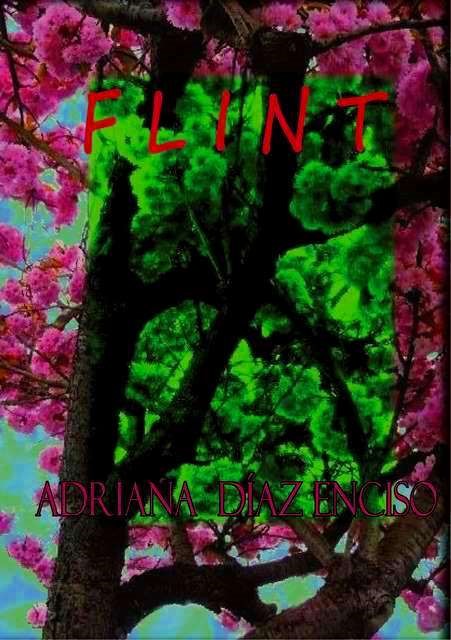
Escribí este texto sin género en la primavera de 2019. Ha circulado entre algunos editores, viviendo mientras tanto en el limbo de todos los libros sin publicar. La pandemia del COVID-19 está cambiando muchas cosas, por fuera y por dentro. Ahora que el futuro se nos muestra como realmente es: incierto, dudo que este librito encuentre en él mejores oportunidadese de ver la luz de manera convencional.
Pero una cosa sí sé: que lo escribí en primavera, que la primavera es un elemento central en él, como encarnación de la esperanza, y que quiero que salga al mundo antes de que termine esta extraña primavera del 2020 —este largo momento marcado por el dolor, el miedo, y sin embargo, por tanta belleza también.
Es por eso que decidí aventurarme por primera vez en los caminos de la autopublicación. De pronto me parece que seguir tratando de publicar este texto “como debe ser” no tiene sentido. Las contingencias de la industria editorial, como le llaman, me parecen ahora más fantasmales e irrelevantes que nunca, muy distantes de la urgencia que nos hace cifrar en palabras nuestra experiencia del mundo.
El origen de este texto es extraño e inevitablemente sombrío: un sueño que tuve el día que falleció Keith Flint, cantante de The Prodigy. He de confesar aquí que no soy fan de The Prodigy, y reconozco mi profunda ignorancia en lo que respecta a su música y la cultura a su alrededor. Pero el sueño fue intenso, me sacudió y conmovió, y desató no solo una serie de sueños con personas que he perdido, sino también una profunda gratitud por la vida y una intensa apreciación de la belleza.
Todo el asunto es extraño, y por lo tanto este texto también lo es. Si lo llegas a leer, encontrarás en el epílogo mis reflexiones sobre su génesis, donde, sin saber cómo llamarle, intento describirlo como “una elegía en prosa, a la vez que un diario de sueños y algunas reflexiones sobre la catarsis y la adoración de nuestros héroes en la cultura moderna”.
Si te preguntas por qué el título es “Flint”, la respuesta está en algunos diccionarios. Una de las definiciones de “flint” (pedernal) en inglés es, por supuesto, “firestarter”. Como bien saben todos los fans de The Prodigy, “Firestarter” es uno de los más grandes hits de la banda, e inmortalizado en el video oficial, es también un muy atinado autorretrato de Keith Flint.
Casi un mes después de que empezara este viaje, un muy querido amigo mío, Armando Vega Gil, decidió dejar el mundo de la misma forma que lo hizo Keith, así que dedico a ambos este texto.
Espero que al leerlo —en caso de que deseen hacerlo—, los miembros sobrevivientes de The Prodigy, los fans de la banda y la familia y amigos de Keith Flint reconozcan no solo el respeto, sino el profundo celo que animan este libro. En cuanto a los fans, familia y amigos de Armando, confío en que aprobarán mi intuición al dedicarle este texto también a él, sabiendo cuánto lo quería.
Si en 2019 estas palabras eran una especie de ofrenda, y una decidida celebración de la vida, quiero creer que aún pueden serlo ahora. Por lo tanto haré mi ofrenda aquí, de manera humilde y quizá oscura, y tan artesanal como lo permite un PDF. Una tercera parte de lo que recaude irá a la National Suicide Prevention Alliance, y otra tercera parte al National Health Service en el Reino Unido: una contribución modesta pero sincera al esfuerzo colectivo por salvar vidas, por reafirmar el valor infinito de la vida.
Simplemente me parece correcto que esta inusual ofrenda salga al mundo en la primavera de 2020. Espero que pasado el encierro colectivo encuentre su forma impresa. Pero ninguno de nosotros sabemos cómo será el futuro, así que por ahora me contento con dejarlo en tus manos de esta forma.
Si deseas escuchar la lectura de un fragmento, haz clic en este enlace. Perdona la rudimentaria calidad. Lo grabé con la única tecnología a que he tenido acceso en la cuarentena.
Por favor ten en cuenta que el libro ESTÁ ESCRITO EN INGLÉS, y que no existe una versión en español.
 Adriana Díaz Enciso